
Sugary Beverage Consumption Down 13% In States With New SNAP Restrictions, Study Shows
Twenty-three states have had waivers approved to limit purchases of sugary beverages and/or foods with SNAP benefits, and 11 of those waivers have been implemented thus far. A new working paper from David Frisvold, associate professor at the University of Iowa’s Department of Economics, and Felipe Lozano-Rojas, associate professor of Public Budgeting and Finance at the University of Georgia, found an initial decrease of soda purchases by 13 percent in the first 10 states where the waivers have been implemented. Spotlight spoke with Frisvold and Lozano-Rojas recently; the transcript of that conversation has been lightly edited for length and clarity.
Why don’t we start by just setting the scene with the number of states that have made changes in this space and then what prompted you to do the study and what you found.
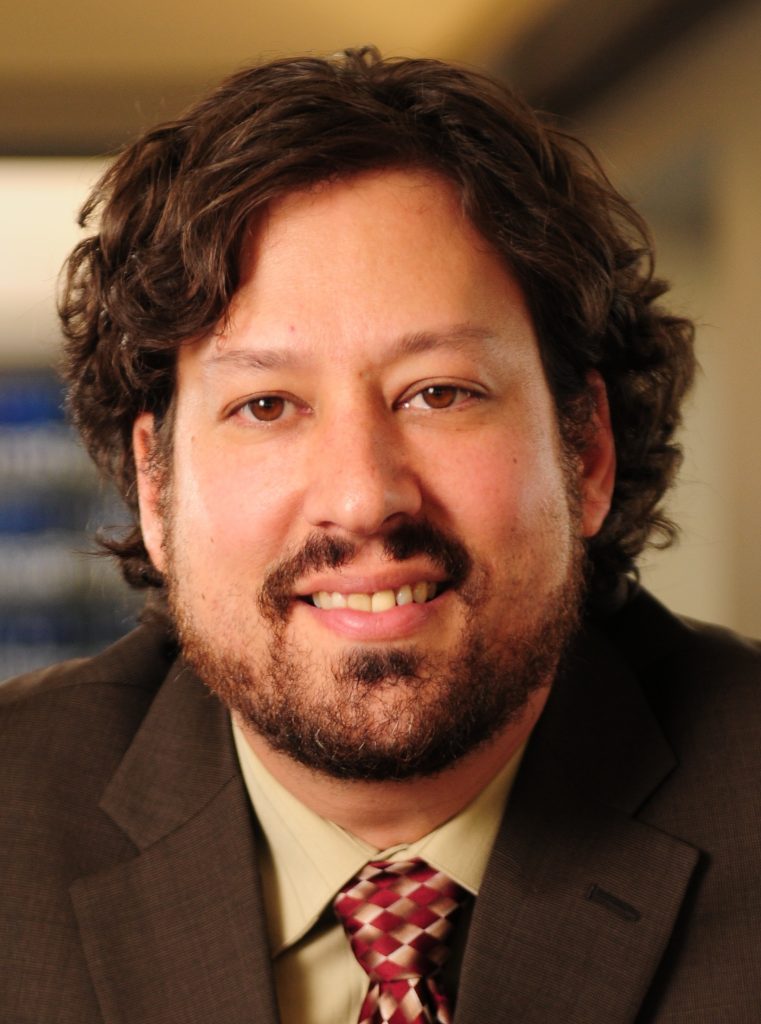
Frisvold: Twenty-three states in total have had waivers that were approved and 11 have been implemented so far. The others have either been vacated by court rulings, put on hold or are scheduled to be implemented in the future. In our study, we focused on the first 10 to be implemented. These proposals have been discussed for decades. It's either been a state or some sub-state region like a city that has made a proposal to the USDA, and USDA has consistently rejected these proposals. That changed in recent months when the USDA started encouraging these proposals.
As to what prompted the idea, I think this has been something that's been of interest for a long time. I’ve had students in my undergraduate health economics class debate these proposals for at least a decade. And it’s something where I think the outcomes are not obvious. There's lots of possibilities of what could happen. We were just interested in trying to understand what did happen as a result of these waivers being implemented for the first time.
Lozano-Rojas: Just to add to what Dave said, we have plenty of experience following policies that target healthy eating. We have experience working with scanner data—receipts or barcodes from the points of sales, the Nielsen data. And there’s this new product called the Omnishopper from Nielsen that helps record transactions from participating households more seamlessly and that increases the amount of information that’s salient to us as researchers. So, we were situated in a particularly good spot to think about this problem and to analyze it as it was implemented.
Frisvold: Felipe and I have been working both independently and together on policies that have been designed to curb consumption of sugar-sweetened beverages or sugary beverages for a while now.
And what were your topline findings?
Frisvold: We saw a decrease in soda consumption of around 13% in the period from April to June in the states that have implemented waivers. One of the things we were interested in was how households would respond who already spend more than they received in SNAP benefits on products that were not restricted. And we saw that they spent less or purchased fewer ounces of soda as well.

Lozano-Rojas: Can I add something to that? I teach microeconomics to MPA students and one exercise I’ve used since I started teaching this seven years ago is the SNAP program, because we have a budget that cannot be used for everything, but only for specific products. So, when you have people spending more on food, they should not care about what is the source of payment. And there's this theoretical discussion that comes out of that in the sense of, if you are making more expenditures than what the SNAP program gives you, you should just substitute the source of payment and walk away without changing your consumption.
We find that wealthy people behave in a different way, as the theory would predict. And we were also very interested in showing that people have behaviors that actually get them further away from that ultra-optimizing, economically predictive behavior.
Would you characterize this as a modest change in behavior as a result of these policy changes?
Lozano-Rojas: It’s small in comparison to policies that target consumption directly, but I still don’t think it’s that small, from the perspective of looking at people who are already spending more than what their SNAP benefits allow for.
Frisvold: I would not say it's a small change. I do think there's a question as to what happens a year from now; do people change how they respond? But if a magnitude like this persists, then I think it's a pretty significant change in what people are purchasing.
Are there differences in how these waivers are structured?
Frisvold: So generally, I would say the waivers consider two sets of products: sugary beverages and sugary foods, although those are kind of loose labels. On the food side, sometimes it refers to candy, specific types of chocolate, things like that, though it is pretty complicated and nuanced in how those products are defined across states. We focused on beverages.
For the 10 states that we focus on, they all restricted regular diet soda, but they had a little bit of variation on whether or not they restricted energy drinks, sports drinks, juice drinks, things like that.
And as part of this, is there any sort of health-focused information that is also being given to SNAP recipients to try to give them more data and make the case that this isn’t punitive but there are actually reasons why this stuff is not good for you?
Frisvold: That could vary by states in terms of how they message it. Sometimes they use language to suggest a health component behind this but it's not like they're providing detailed information.
Lozano-Rojas: As we were writing the paper, I learned that the bill that allowed for the waivers, the HR1 bill, also cut funding for the SNAP-Ed program, which did provide some education along with the resources.
So, for policymakers in other states who may be looking to enact policies like this to get waivers adopted, do you think that your work offers any particular lessons for how they should go about that, that might differ from how this has been done in the past?
Frisvold: I guess I would say this is probably one part of understanding the overall effect of the change. It's helpful to know this, but depending on what the policymaker's goals are, there might be other outcomes that they want to know as well. One of the things that we looked at was to try to understand whether or not the changes that we saw were truly due to these restrictions or whether or not they were happening because of declining SNAP participation, in terms of retailers, and increasing prices. Generally speaking, we don’t think those factors can explain our results.
But one of the things I think that policymakers would want to consider would be the changes that these restrictions have on SNAP recipients, on retailers, and on non-recipients. It's not like they're costless to implement, so there's a lot that policymakers would want to weigh in considering whether or not to go forward.
Felipe, did you want to add to that?
Lozano-Rojas: I think that evidence builds up scaffolds, and there's a lot of things I would like to know before definitely, being able to say, yes, this is successful because it reduces consumption. First, how long is that effect going to last? Is it going to be permanent? It also makes the SNAP program more cumbersome and that could diminish the perceived value that it has for individuals. And we don’t know what the consequences of that are. There are trade-offs and we have more to learn the impacts.
Going forward, are you hoping to continue to add states to this work?
Lozano-Rojas: We are looking for additional funding. We think the rollout of this and getting a sense of what the permanent effects might be are important to policymakers. And if states introduce more variations on items that can be restricted, we want to look at whether that will undermine the overall perceived value of SNAP.