
NY Business Council Blueprint Aims To Cut Red Tape, Spur Workforce Development
Too often, elected officials approach the policies of cutting bureaucratic red tape to spur business growth and building new energy around worker development programs to create good new jobs as totally separate strategies that don’t necessarily intersect.
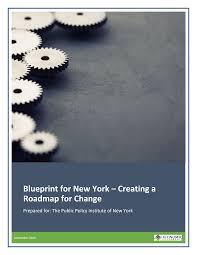
A blueprint for systemic change and economic growth released last fall by the Business Council of New York State—and featured in a briefing last week at New York City’s Civic Hall—argues that streamlining regulation and enhanced job creation are two parts of a cohesive, successful economic development strategy.
The event, co-sponsored by the Public Policy Institute of New York State and the New York State Economic Development Council, explored the recommendations from the report and what it could mean for a re-energized state economic sector.
The report showed that New York's economic competitiveness is at a turning point—the research found that New York ranks 50th in business, friendliness, taxation, and out migration. And of 550 business leaders surveyed, only 3% felt that regulators and lawmakers understood and supported their business.
But the report also underlined key proposals to drive change, many of which Gov. Kathy Hochul’s administration has begun pursuing, said Ryan Silva, executive director of the New York State Economic Development Council. Some of the key recommendations, which Silva said came from input from 40-plus business partners across the state, include:
- Utilizing AI to remove duplicative, redundant, and outdated regulations that create hurdles and increase costs and extend timelines.
- Reforming the New York State Environmental Quality Review Act (SEQR) to reduce timelines in the environmental review process for projects.
- Appointing a regulatory czar within the state executive chamber to review and assess any new regulation introduced and look at existing regs that can be amended, changed, or removed. Silva noted that Hochul has appointed Zoe Jacobs to lead this effort, called EXPRESS NY, which would encourage everyday New Yorkers to help identify unnecessary regulations.
- Reviewing the state's energy policy and identifying ways to address concerns addressing affordability, reliability, generation, and economic business needs.
Jeanette Moy, commissioner of New York’s state office of General Services, which oversees contracts, real estate, financial transactions and construction for the state, said Hochul has given state officials clear marching orders to make regulation reform a key priority.
“From the top down, she's been asking us to modernize our operations and make sure that we're outside listening to constituencies, hearing what the challenges are at an operational level and always improving.” Moy said. She said the EXPRESS program “is a very sincere focus of the governor to make sure that we're hearing from all areas where we need to take the bureaucracy out in order for business and our communities to move forward.”
A final panel looked at the potential impact of the blueprint’s recommendations in specific areas, such as housing, nonprofits, small businesses and the tech sector.
Loycent Gordon, owner/CEO of Historic Neir’s Tavern in Woodhaven, Queens, said one of his biggest challenges is uncertainty. “Capital flows where certainty is in New York City. And for a large part, in some ways the state is oftentimes very uncertain. Now, we have things that are happening federally that often are beyond our control. What we can do as a state is to ensure that we stand up loudly, proudly, as best as possible, to let the business community—small businesses like me—know that we’ve got your back.”
Jim Malatras, Chief Strategy Officer and Sr. VP of Education at The Fedcap Group, said that for nonprofits, cutting excess regulation is crucial to meeting the need for affordability so many of Fedcap’s clients and partners are searching for.
“How can you afford to live in this great state of New York?” Malatras asked. “We're all here for a reason, the greatest city in the world, and the greatest state in the world, but it gets harder and harder every day to do that. And I think working together with government, the for-profit sector and the not-for-profit sector has to really join forces in a unique way here or we're going to be pushed out of the state.”
Kenny Burgos, CEO of the New York Apartment Association, a trade organization of rent stabilized property owners throughout the entire city of New York, also pointed to uncertainty and shifting priorities for various levels of regulation as a key hurdle.
“What we struggle with on a day-to-day basis is of course that regulation is almost ever moving,” Burgos said. “And we are regulated from the federal to the state to the city level. And with an issue like housing, which when you check every single poll across the country, and especially in New York, is people's number one issue.”
Julie Samuels, President and CEO of Tech: NYC, said government must learn to move more quickly and with more agility in partnering with the private sector to help train workers for jobs that may not even exist yet, given the advent of AI.
“If anyone tells you that they know what the jobs of the future are going to look like, they're lying,” said Samuels. “There are clues, but no one knows. The employers don't know. We are living in a moment of transformation. . .. and it has never been more important in all the years I've been doing this work, that we all work together and in real time have these conversations because it is rapidly changing.”
The bottom line, as Gordon expressed, is to create stable businesses that can be economic anchors for employees seeking greater opportunity. He recounted the story of finding one of his employees in the dining room one day, where he found out she was signing a lease for an apartment just a few houses up the block.
“And I thought to myself, what a powerful statement. Because what she's doing is saying she has confidence in this business to pay her wage, her living expenses, her rent, her groceries, and to live in this community. And I'm helping to facilitate that. And I thought, isn't that the reason why we're all here?”